

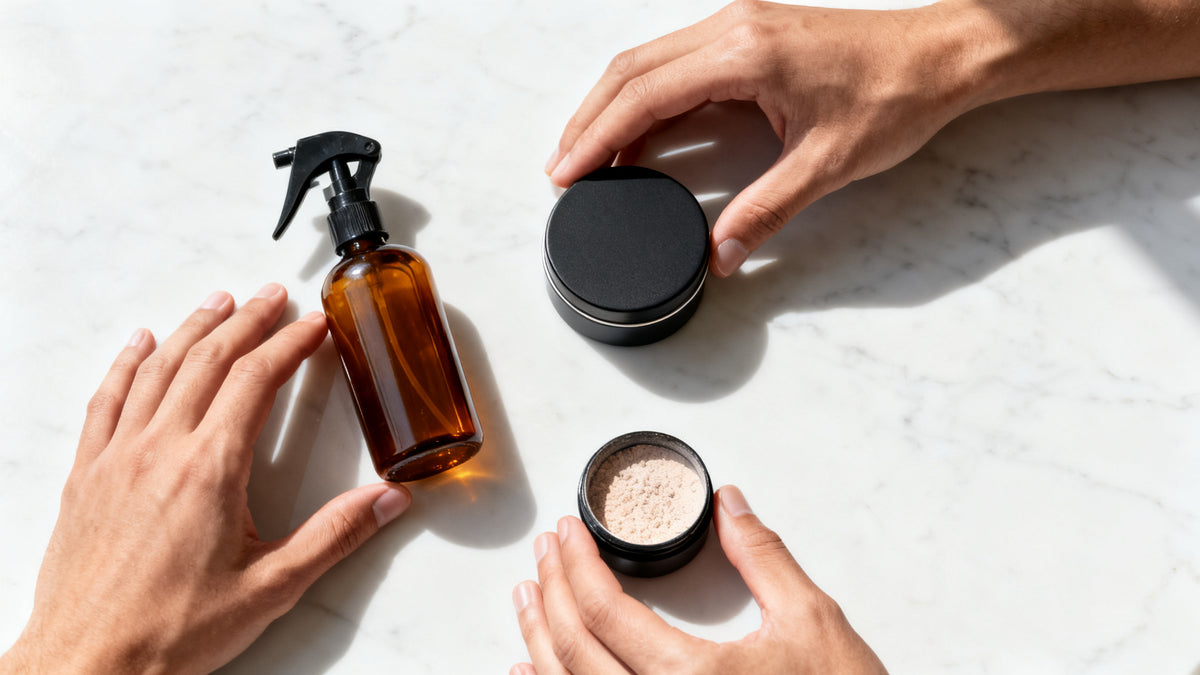
Three products. Not seven, not twelve. Just three, carefully chosen, in the right order. A minimalist men's styling routine is exactly that: stripping back to the essentials to gain efficiency, time, and style consistency. Many men accumulate tubes and bottles without really knowing what each one does. The result: chaotic mornings, a cluttered bathroom counter, and hair that looks like nothing.
⭐ Key Takeaways
- A minimalist routine consists of 3 products: a texturizing spray, a powder or wax, and a suitable comb.
- The order of application changes everything: prepare damp hair before styling dry hair.
- Your hair type determines the finishing product, not the latest trend.
- Fewer products = healthier scalp in the long run.
Why a minimalist styling routine works better than a full cabinet
Accumulating styling products without a strategy means layering formulas that cancel each other out. A gel that stiffens over a cream that softens, a spray that weighs hair down over a serum that lightens it. The result is often the opposite of what you wanted. Your hair becomes heavy, your scalp gets clogged, and your hairstyle lasts two hours at best.
A minimalist routine is based on a simple principle: each product has a distinct role. Prepare, structure, set. These three actions cover the entire styling process, whether your hair is short, medium-length, fine, or thick.
The other advantage: fewer products mean fewer residues. Fewer residues mean a scalp that breathes better between shampoos. Over time, your hair gains lightness and looks more natural. Honestly, it's the kind of advice many men would have liked to receive ten years ago.
💡 Did you know?
The concept of minimalist grooming exploded in major European cities starting in the 2020s, driven by a generation of men who wanted quick results without complicated rituals. Paris, Berlin, Stockholm: the principle is the same everywhere. One product to prepare, one to finish, one tool to style.
The 3 essential roles of an effective men's styling routine
Every effective styling routine consists of three steps: preparation on damp hair, structuring as it dries, and finishing on dry hair. Understanding these three steps allows you to choose only what truly serves each one, without duplicates. It's simple. And that's exactly why it works.
Step 1: Prepare the hair (damp or slightly damp)
This is the step many skip, and it's often where everything is decided. A texturizing spray on damp hair opens the hair fiber, adds volume at the roots, and prepares the way for what comes next. Without this base, finishing products slide over smooth hair and don't hold.
Sea salt spray is the most common format for this step. It mimics the natural effect of seawater: texture, lightness, volume. No residue, no weighing down. It's the product that makes the difference between flat hair and hair that looks alive. A few sprays are enough: no need to take a second shower.

Step 2: Structure the hairstyle (almost dry hair)
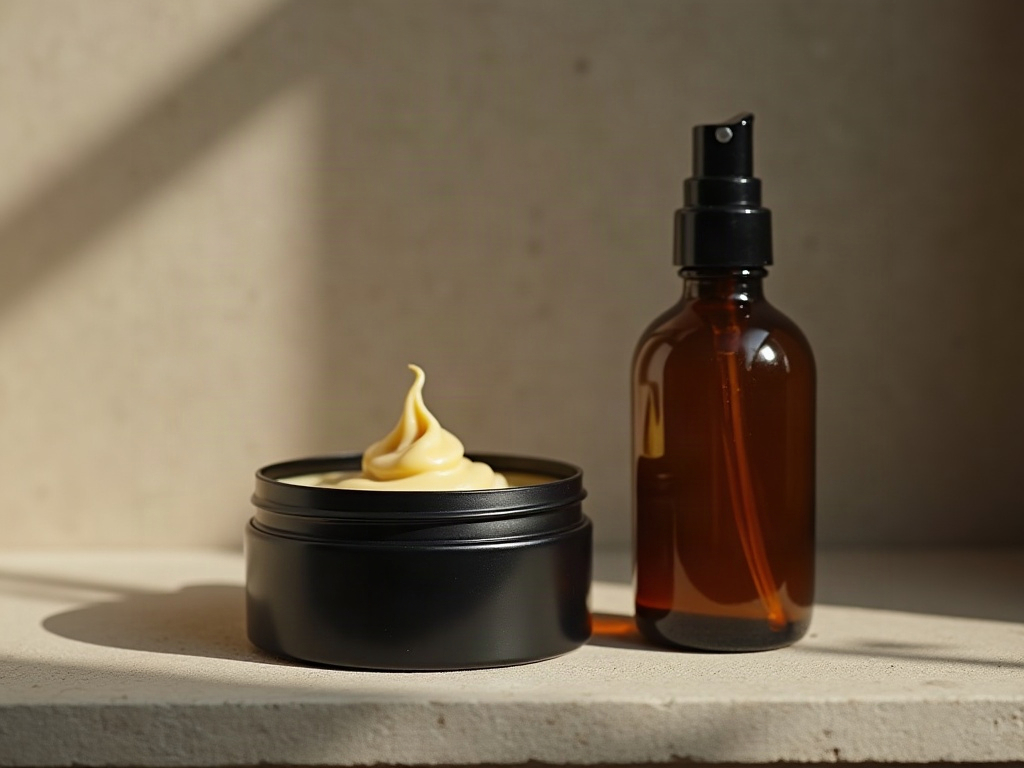
This is where the shape is created. A styling powder or matte wax applied to almost dry hair sculpts the style without freezing it. The texture remains malleable for a few minutes, allowing time to adjust. Once drying is complete, the hold sets.
The choice between powder and wax depends on the desired result. Texturizing powder provides volume and an ultra-natural matte finish, perfect for fine hair or unstructured cuts. Matte wax offers a stronger hold and is suitable for more structured styles, thick hair, or precise cuts like the undercut or crew cut.
Step 3: Finish and set (optional, for structured styles)
For many men, the first two steps are enough. But for those who want a longer-lasting hold or a more defined style, a third product can complete the routine. Not a third styling product: a styling tool, such as a texturizing comb, which allows you to distribute the product evenly and create natural waves.
A wide-tooth comb lifts the roots. A spiked comb creates texture. These two effects are impossible to achieve with fingers alone, no matter how good they are.
Powder vs wax: how to choose based on your hair type
Hair type is the only criterion that should guide the choice of finishing product, not the packaging or the price. Here is a direct comparison to help you decide quickly. (Spoiler: if you're still hesitating after the table, read the fine hair section a little further down.)
| Criterion | Styling powder | Matte wax |
|---|---|---|
| Finish | Matte, natural | Matte, defined |
| Hold | Light to medium | Medium to strong |
| Ideal for | Fine hair, unstructured hairstyles | Thick hair, structured styles |
| Application | Sprinkle at the roots | Warm between palms |
| Rinsing | Cold water is enough | Hot water recommended |
| Result style | Natural, airy | Clean, precise |
The mistakes that sabotage an otherwise well-thought-out routine
Most failed styling routines suffer from poor application, not a bad product. A few mistakes happen over and over, and they're easy to correct. Some are frankly funny when you see them from the outside.
Applying wax to wet hair
This is mistake number one. Wax, like powder, doesn't hold on water-saturated hair fibers. It slides, dilutes, and disappears once drying is complete. Finishing products should always be applied to dry or almost dry hair. Preparation, however, is done on damp hair. The order is non-negotiable. No compromises on this.
Taking too much product
A dab of wax. A pinch of powder. That's it. Quality styling products are concentrated: a small amount is enough for the entire head of hair. Starting with too much weighs hair down and produces exactly the effect you wanted to avoid. If the result looks too heavy, it's almost always a matter of dosage, not a bad product. Start over with less, never more.
Not warming the wax between the palms
Wax is worked with the heat of the hands. Thirty seconds of friction between the palms before application: the texture opens up, becomes malleable, and distributes evenly. Applied directly from the jar, it sticks in clumps on the first strands touched. This one gesture changes everything. It's pretty much the equivalent of cutting cold butter straight from the fridge: it doesn't spread, and it makes a mess.

The tool you always forget: the texturizing comb
A good texturizing comb does what fingers cannot: it lifts the roots, distributes the product to every tip, and creates regular waves in a few passes. It's the tool that transforms a "decent" hairstyle into one that looks styled.
The principle is simple: use it on still slightly damp hair, after the spray and before the wax. The flexible teeth lift without breaking the fiber. The hairstyle gains volume at the roots without artificial puffiness.
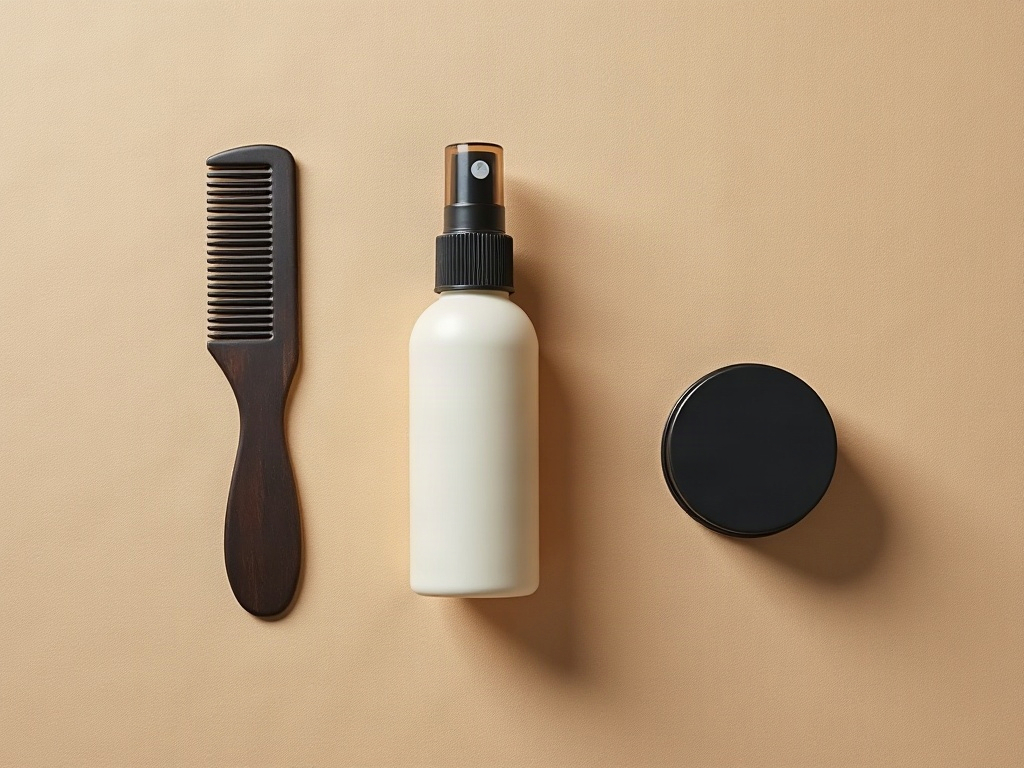
Unlike a round brush or a hairdryer, the texturizing comb requires no learning curve. A few passes from back to front, and you're done. It's the most underrated tool in an effective men's hair routine. And often the cheapest of the three.

Adapting the minimalist routine to your hair type
The 3-product routine doesn't apply the same way to fine hair as it does to thick or curly hair: the products remain the same, but the dosage and order vary. Here's how to adjust without rethinking everything.
Fine or thinning hair
Absolute priority on volume. Generously apply the sea salt spray to the roots on damp hair. Then, sprinkle the styling powder at the roots before drying: it visually thickens each strand and gives the impression of more density. Wax, if used, should only touch the ends. Never the roots, never in large quantities on fine hair.
For very fine hair, the texturizing styling powder often becomes the central product of the routine. It advantageously replaces wax in 90% of situations.
Thick or hard-to-tame hair
Here, it's the wax that does the work. The spray prepares and lightens. The matte wax structures and holds. The texturizing comb distributes to avoid clumps. Thick hair absorbs products well: you can go up to a generous walnut of wax, but no more.
The common mistake with thick hair: trying to "matte" a rebellious mane with too much product. The more you load it, the more the hair bends under the weight. It's better to use a small amount of wax, well worked, on dry hair, section by section.
Curly or wavy hair
Curls don't need to be structured; they are naturally. The sea salt spray amplifies existing waves without breaking them. Wax, used sparingly on the contours, defines the style without stiffening. The texturizing comb on curly hair is always used on damp hair: on dry hair, it frizzes and creates unwanted volume.
"Simplicity is the ultimate sophistication."
Attributed to Leonardo da Vinci - a principle that the best Parisian hairdressers follow to the letter.
What 2026 trends change (or don't) about the minimalist routine
2026 men's hairstyle trends reinforce the minimalist principle: matte finish, natural texture, discreet volume, and a cut that lives with movement. The wet-look gel of the 2010s clearly belongs to another era.
What hairdressers say is making a strong comeback: mid-length textured cuts, masculine curtain bangs, and unstructured styles that look effortless. GQ France notes in its 2025-2026 style report that "the matte finish is establishing itself as the new standard of male grooming in Europe." All these styles have one thing in common: they require texture, not shine. Powder and matte wax are exactly the products they demand.
What remains constant: basic maintenance. Healthy hair holds styling better. A suitable shampoo two or three times a week, no more, to avoid drying out the scalp. And a complete rinse of styling products after each day to avoid buildup.
Getting practical: the routine in 4 minutes flat
An effective men's styling routine takes no more than 4 minutes: that's the promise of minimalism applied to the letter. Here is the exact order, in the morning, to leave with a clean and lasting result. Four minutes is less than the time it takes to heat up your coffee. No excuses.
- Out of the shower, damp hair: 3 to 4 sprays of sea salt, distributed at the roots and on the lengths. Do not rinse. Let it soak in while drying.
- Drying: air-dried or with a towel, never vigorously. Pat, don't rub. The hair should remain slightly damp at this stage.
- Texturizing comb: a few passes from back to front on almost dry hair. The roots lift, the volume settles.
- Finishing product: a walnut of wax or a pinch of powder, worked for 20 seconds between the palms. Apply in small touches on the lengths and contours. Never on the roots if the hair is fine.
Result: a natural and held men's hairstyle that lasts all day, without touch-ups.
Frequently Asked Questions
How many products are needed in a men's styling routine?+
Three products are enough for a complete and effective routine: a texturizing spray (preparation step on damp hair), a finishing product like a powder or matte wax (structuring step on dry hair), and a texturizing comb (distribution and volume). Beyond three products, you risk layering formulas that neutralize each other and unnecessarily weighing down the hair.
Styling powder or wax: which one to choose?+
The deciding criterion is the hair type, not the price or the brand. Styling powder is made for fine or thinning hair that lacks volume: it is sprinkled at the roots and visually thickens each strand. Matte wax is suitable for thick hair or constructed styles that need a firmer hold. For fine hair, powder replaces wax in 90% of situations. For thick hair, wax remains the reference.
How to properly maintain your hair daily as a man?+
Daily maintenance relies on three simple gestures: do not wash your hair every day (two to three times a week is enough to preserve natural sebum), rinse styling products thoroughly with warm water in the evening, and avoid rubbing your hair with a towel after the shower. Patting rather than rubbing preserves the hair fiber and reduces frizz.
How to remove the straw effect on hair?+
The straw effect comes from a dehydrated hair fiber. First cause: shampoos that are too frequent or formulas that are too harsh. Second cause: buildup of styling products that are not rinsed out well, which dries out the scalp. Immediate solution: a hydrating mask once a week, and mixing a drop of vegetable oil into the styling wax to nourish the fiber while styling. Over time, reducing the washing frequency often makes the difference.
What are the hairstyle trends for men in 2026?+
In 2026, textured cuts dominate: mid-length hair with natural movement, masculine curtain bangs, unstructured styles that look effortless. The matte finish has established itself as the standard, shiny gel is clearly out of fashion. The products that serve these trends are exactly the same as those of a minimalist routine: texturizing spray, powder or matte wax, texturizing comb.
Can you use styling powder and wax together?+
Yes, and it is even the recommended combination for fine hair. The powder is sprinkled at the roots on dry hair to create volume. The wax is then applied to the lengths and ends to define the contour. The two products are compatible as long as you respect the order: powder at the roots first, wax on the lengths next. Never mix them in your palms.
Does the minimalist styling routine work on all hair types?+
The three-step structure (prepare, structure, finish) works on all hair types. What changes is the dosage and the choice of finishing product. Fine hair favors powder and small quantities. Thick hair supports more wax. Curly hair benefits especially from the spray and the comb on damp hair. The framework remains the same, the adjustments are minor.


