


Styling fine hair for men without damaging it takes less effort than you think, but a bit more technique than for thick hair. Every gesture counts: the heat of the hairdryer, the amount of product applied, even the way you rub the towel. Fine fibers break easily and become weighed down even faster. Good news: a few adjustments are enough to completely change the result.
⭐ Key takeaways
- The classic terry towel is the number one enemy of fine hair: it creates friction and weakens the hair shaft.
- Using a hairdryer from a good distance (at least 15 cm) and on a warm setting protects the keratin.
- Heavy products (gel, hairspray, greasy wax) flatten volume: opt for lightweight formulas without harsh sulfates.
- The haircut is the first step to volume: a well-executed fade does all the foundational work.
- Styling powder and sea salt spray are the two products best suited for fine hair fibers.
Why fine hair breaks more often than other hair
Fine hair has a smaller diameter, which mechanically makes it less resistant to tension, heat, and friction than thicker fibers. This is not an irremediable genetic weakness: it is a physical reality that simply requires more attention to daily habits. Keratin (the protein that forms the hair shaft) is identical regardless of thickness, but the cuticle (outer protective layer) is thinner on a fine fiber, making it more exposed to mechanical and thermal damage.
Trichologists, hair health specialists, have pointed out since the 1980s that the average diameter of fine hair ranges between 40 and 60 micrometers, compared to 80 to 100 micrometers for a thick fiber. This difference in cross-section represents up to four times less material on the shaft, which mechanically explains why mistakes in technique cost more on a fine fiber.
The most common mistakes? Rubbing hair with an ordinary towel after a shower, using a fine-tooth comb on wet hair, and applying too much product believing that "more" gives more hold. In reality, each of these actions compresses the shaft or mechanically weighs down a fiber that does not have the resources to carry this weight.
Understanding this mechanism is already half the battle. The second half is using the right techniques.
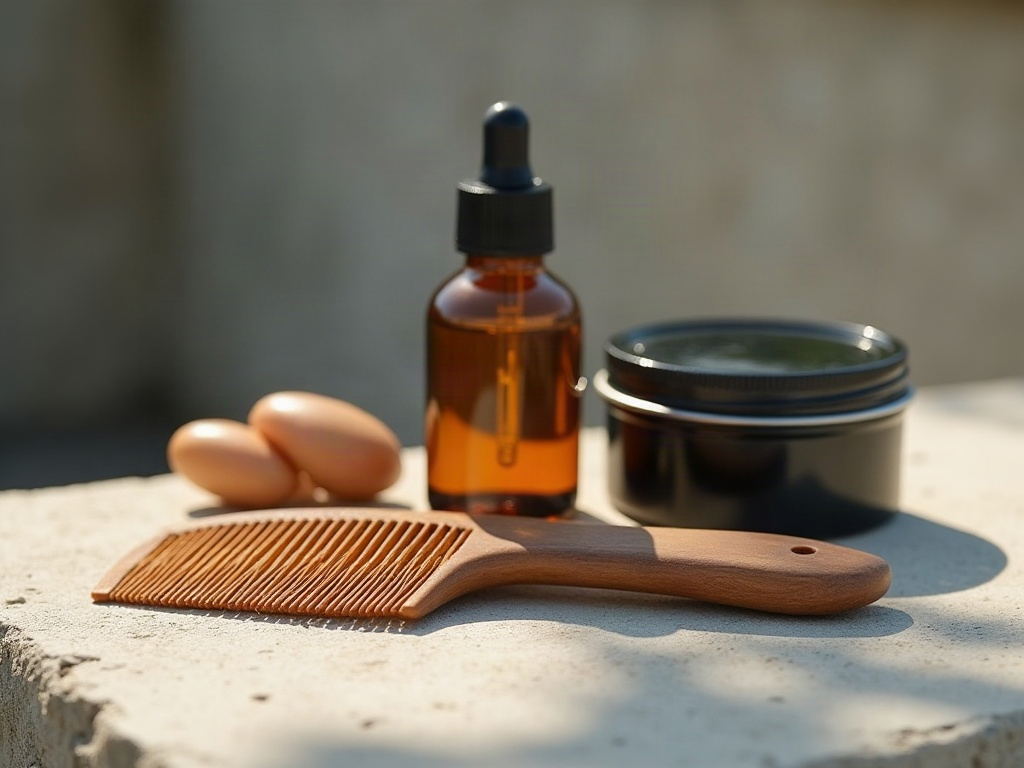
Drying: the stage where everything is decided
Drying influences the final volume and the long-term condition of the fiber much more than the choice of styling product: poor drying destroys in a few minutes what good products take weeks to improve.
Getting out of the shower: the micro-towel rule
Forget the thick terry towel. The looped cotton of classic towels creates microscopic friction over the entire surface of the hair. Result: raised cuticle, swollen hair (not in a good way), and accelerated breakage. Opt for a microfiber towel, which you wrap around your head like a turban without rubbing. Press gently, absorb. That's all.
Then leave the hair 60-70% damp before starting to dry. Hair that is too wet is even more fragile because keratin relaxes in water.
The hairdryer: heat, distance, direction
Three parameters to remember. Heat first: warm setting, never the "hot" setting continuously. Distance next: at least 15 centimeters between the nozzle and the scalp. Direction finally: blow from the roots to the ends, lifting the strands with a round brush or by hand.
This lifting gesture at the roots, practiced on 70% dry hair, creates a volume effect that lasts all day. It is the foundation of styling for fine hair for men, even before the product.
Haircuts that add body without weakening hair further
The haircut is the most powerful lever for a man with fine hair: a bad haircut visually accentuates the fineness, a good haircut creates a lasting illusion of density without any product.
The fade: the essential foundation
A gradual fade on the sides and the nape lightens the temples and concentrates the mass of hair on top. The visual contrast between the top and the sides creates the impression of thicker hair. Ask your hairdresser for 3 to 7 centimeters on top, to have enough material to work with products.
Avoid heavy thinning: this technique hollows out the fiber even more and is not suitable for fine hair. Prefer a straight cut at the ends, which keeps the mass where it is needed. Hairdressers specializing in fine texture also recommend the so-called point-cut technique (cutting diagonally with the tips of the scissors): it reduces the weight of the ends without hollowing out the fiber like razor thinning.
Haircuts to absolutely avoid
- Very long hair on top (more than 10 cm): the hair's own weight flattens the roots.
- The radical undercut: the too strong contrast exposes the fineness of the lengths even more.
- Very thinned-out ends: they give an immediate sparse appearance.
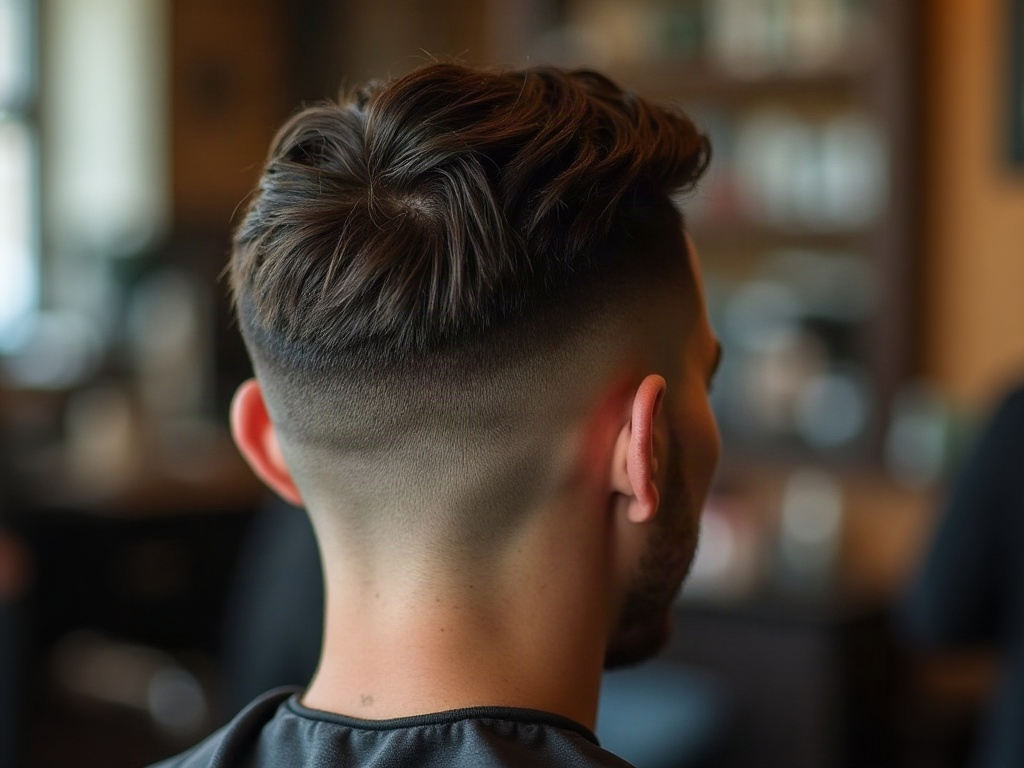
Which styling products to choose to avoid weighing down the hair fiber
To style fine hair for men without damaging it, the rule is simple: choose lightweight formulas, without harsh sulfates, without drying alcohol, without heavy silicone. It is not a question of price, it is a question of ingredients and texture.
Styling powder: the most underestimated tool
Styling powder is applied directly to the roots on dry hair. It absorbs excess sebum, mechanically lifts the base, and creates an instant volume effect without visible residue. Unlike wax or gel, it does not weigh hair down. A small amount is enough: between your thumb and index finger, rub the granules, then work them directly into the roots.

Sea salt spray: natural volume without weakening
Sea salt spray (or Himalayan salt) is a classic for fine hair. It works on texture, creates grip between strands, and gives that natural slightly textured look we often seek. It is applied to slightly damp hair before drying, or to dry hair to revive volume during the day. The advantage: it does not leave a sticky residue and the hair remains flexible.

Matte wax: to set without sticking
Matte wax is suitable for fine hair provided you take an infinitesimal amount. It is used to define the hairstyle once volume is created, never to build it. Warm a small amount between your palms, emulsify well, then lightly touch the lengths and ends. Work with your fingertips, not your whole hand: precision avoids the "helmet" effect that all men with fine hair dread.
💡 Did you know?
Sea salt in texturizing sprays reproduces the effect of seawater on hair: by settling on the cuticle, salt crystals create tiny "cleats" between the strands that increase friction and therefore hold. That is why hair looks thicker after returning from the beach than at the office.
The product chart: which ones to choose according to your desired result
| Product | Result | Risk for fine hair |
|---|---|---|
| Styling powder | Root volume, natural matte effect | None if lightly dosed |
| Sea salt spray | Texture, pre-drying volume | Low (avoid daily overuse) |
| Matte wax | Definition, flexible hold | Low if small quantity |
| Styling gel | Strong hold, wet effect | High: weighs down and dries out |
| Hairspray / fixing spray | Long-lasting hold | High: makes brittle |
| Greasy / shiny wax | Shine, structured hairstyle | High: flat and greasy |
Washing techniques to protect fine hair every day
Styling starts in the shower: an overly harsh shampoo strips fine hair of its natural hydrolipidic film, making it even more fragile and difficult to style as soon as you get out.
Washing frequency and water temperature
Fine hair tends to get greasy quickly because sebum travels more easily along a thin hair shaft. The temptation to wash every day is understandable, but counterproductive: each wash slightly weakens the keratin. Aim for a 2- to 3-day cycle between shampoos. Styling powder can act as a dry shampoo between washes.
Water temperature matters too. A cold rinse at the end of your shower closes the cuticle and gives the lengths a smoother, shinier appearance. Two minutes under cool water is enough.
The right massage technique
Apply shampoo only to the scalp, not the lengths. The idea is to clean the roots, not dry out the ends. A circular massage using the pads of your fingers (never your nails) also stimulates microcirculation and gradually improves hair anchorage.
For conditioner or treatment: apply it only to the lengths and ends, avoiding the roots. A heavy conditioner at the roots flattens volume even before styling.
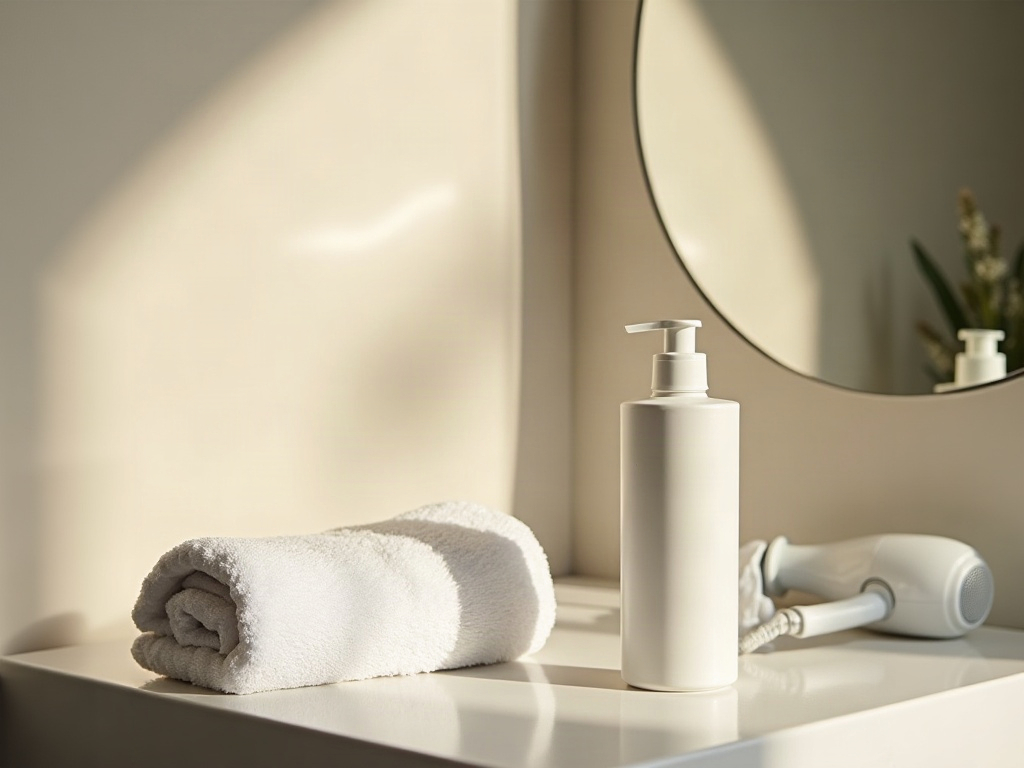
The complete routine: from the shower to the final hairstyle in 5 steps
Here is the optimal sequence for styling fine hair without damaging it, from getting out of the shower to the final comb-through, with no shortcuts or unnecessary products.
- Getting out of the shower: gently pat dry with a microfiber towel, never rub. Leave it 60-70% damp.
- Apply the sea salt spray: 3 to 5 sprays on the roots and lengths, working it in lightly with your fingers.
- Dry by hand and with a hairdryer: head tilted forward, roots first, warm heat, nozzle at least 15 cm away. Finish with a 30-second blast of cool air to set the volume.
- Apply the styling powder: on dry hair, directly at the roots, in small amounts, working it in with your fingers.
- Finish with a touch of matte wax: minimal amount (the size of a small pea), emulsified between your palms, applied to the lengths and ends to define the shape.
This routine takes between 8 and 12 minutes. It doesn't require sophisticated equipment. And the result is reproducible every morning without variation.
If you prefer not to search for each product separately, the kit below brings together exactly the three tools for this sequence: it is designed to be used in the order described here, not as a substitute for the individual products mentioned above.

The silent mistakes that weaken fine hair without us noticing
Some habits damage fine hair fiber cumulatively: the effects build up over several weeks in the form of breakage, premature split ends, or persistent loss of volume.
- Sleeping on an ordinary cotton pillowcase: cotton creates constant friction throughout the night. A satin or silk pillowcase significantly reduces this friction.
- Wearing a fitted cap too often: repeated pressure on the roots compresses the follicle and can slow growth in areas of friction.
- Brushing wet hair with a classic round brush: a wide-tooth detangler or wide-tooth comb is the only option for wet hair.
- Accumulating products without an intermediate shampoo: residue clogs the follicle and weighs down the roots. A clean scalp is the foundation of good volume.
- Neglecting regular maintenance cuts: damaged ends travel up the shaft and gradually weaken the length. Maintenance every 6 to 8 weeks is enough to maintain the cut and eliminate split ends.
"Fine hair doesn't lack volume. It lacks structure."
Recognized principle in trichology: it's technique, not thickness, that makes the hairstyle.
Adapting your hairstyle to your face shape
Your face shape dictates the ideal height and direction of volume: poorly oriented, even the best product for fine hair can give a result that clashes with your proportions.
Oval face
The most versatile face shape. Almost all layered cuts work. Volume can be directed upwards or forwards depending on preference. Simply keep the width on the sides moderate so as not to break the natural proportion.
Round face
Height volume is your best ally. A cut with volume on top visually elongates the face. Avoid flat hairstyles or low parts that widen. The quiff or textured pompadour are perfect, even with fine hair. A few centimeters of height at the roots are enough to create this impression of elongation.
Square or rectangular face
Here, we soften the angles. A rounder cut on top, with soft rather than structured volume, softens the features. Avoid very short tops that expose the jawline. The textured crop technique (fringe falling slightly over the forehead) works particularly well to soften the angles of a square face.
Elongated face
Here it's the opposite: avoid volume upwards, which elongates even more. Favor a horizontal cut with volume on the sides to visually widen. A side part and a cut of uniform length on top give width without weighing down the fiber. Very high parts or tapered tops are to be avoided for this profile.
FAQ
How to style fine hair for men?+
The key is to create volume first with drying (head tilted forward, roots lifted with a brush or by hand), then to set this volume with styling powder or a sea salt spray. Gels and hairsprays are to be avoided because they weigh down the shaft and flatten what the drying has built.
What is the ideal cut for a man with fine hair?+
The progressive fade on the sides with 3 to 7 cm of length on top is the most effective base. It creates a visual contrast that gives the impression of denser hair. To avoid: very tapered cuts at the ends, too radical undercuts and lengths over 10 cm that flatten the root by weight.
How to style very fine hair?+
For very fine hair, styling powder is often the only product needed. It is applied dry directly to the root, without adding anything to the lengths. Combined with a good drying, it can visually transform the perceived density in a few seconds. The goal is not to add weight, but to create structure at the base.
What to do if my fine hair lacks hold all day?+
If the hairstyle collapses in the middle of the day, it's often a base problem: either the drying did not sufficiently lift the roots, or the product used is too heavy. The simplest solution: keep a small bottle of sea salt spray in your pocket, one or two sprays at the roots will revive the volume in 10 seconds without completely restyling.
Can you use wax on fine hair without damaging it?+
Yes, provided you choose a matte effect wax (not shiny or greasy) and use it only as a finish, on the lengths and ends. The quantity must be tiny: less than you think. A wax well emulsified between the palms disperses without leaving a heavy residue and does not weaken the fiber if the shampoo rinse is regular.
How often should you cut your hair when it is fine?+
Every 6 to 8 weeks is the recommended frequency to maintain a clean fade and eliminate split ends before they travel up the shaft. Waiting longer weighs down the ends and reduces the volume effect created by the cut. A quick maintenance cut at the hairdresser (15 to 20 minutes) is enough between two full cuts.


